NASA Invites 2 Aldine ISD Educators to Cape Canaveral to View Launch of Next-Generation Weather Satellite
GOES16 will save lives by predicting severe weather outlooks sooner and more accurately.
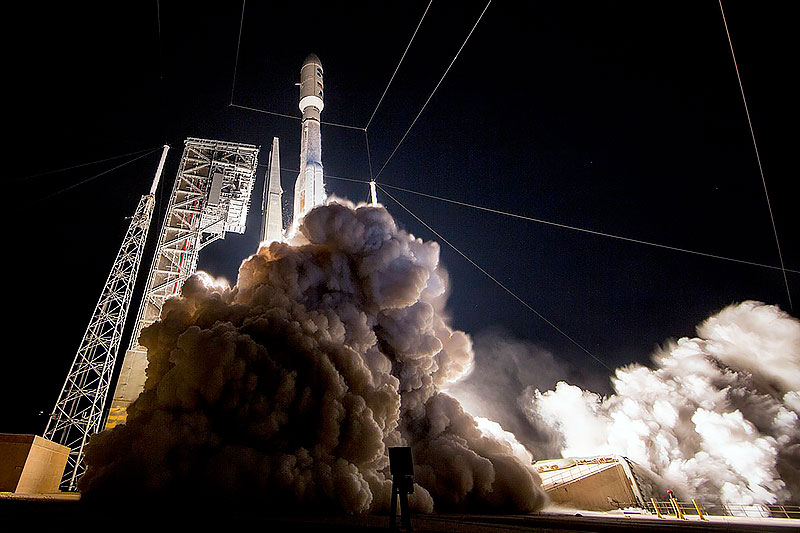
NASA launched GOES-R (now officially GOES16) on Nov.19 from Cape Canaveral.
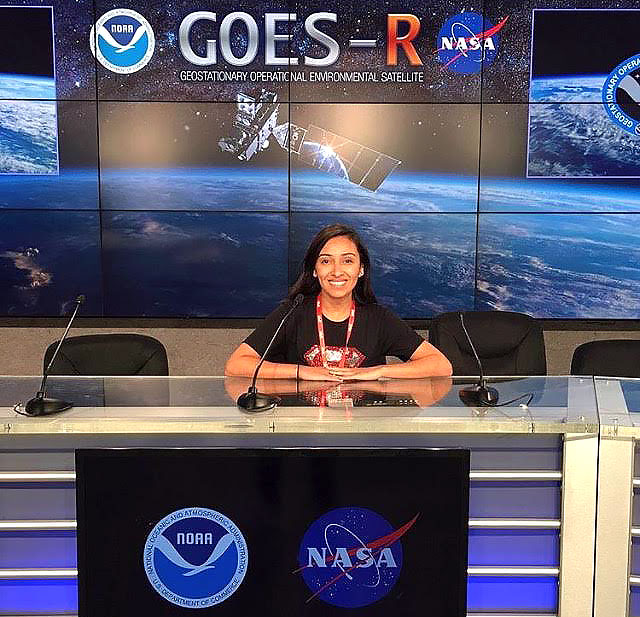
Andrea Soliz at NASA facilities in Florida.
“This was a humbling, eye–opening experience,” said Soliz. “I got to count down with mission control. I got to feel the ground rumble beneath my feet. And I got to see the combustion light up the night sky. These are all memories I will cherish for the rest of my life.”
Soliz is an eighth grade science teacher at Stovall Middle School. Quintanilla teaches physics at MacArthur High School.

David Quintanilla and Andrea Soliz visit NASA facilities in Florida. The witnessed the launch of GOES-R.
The science enthusiasts had the privilege of touring the NASA facilities in Florida after applying online. The launch of GOES-R capped the trip. GOES-R, now called GOES16, is a cutting-edge weather satellite. It will save lives by predicting severe weather outlooks sooner and more accurately.
“Visiting the Kennedy Space Center at Cape Canaveral was so surreal,” added Soliz. “This was the experience of a lifetime for an eighth grade teacher who loves space!”
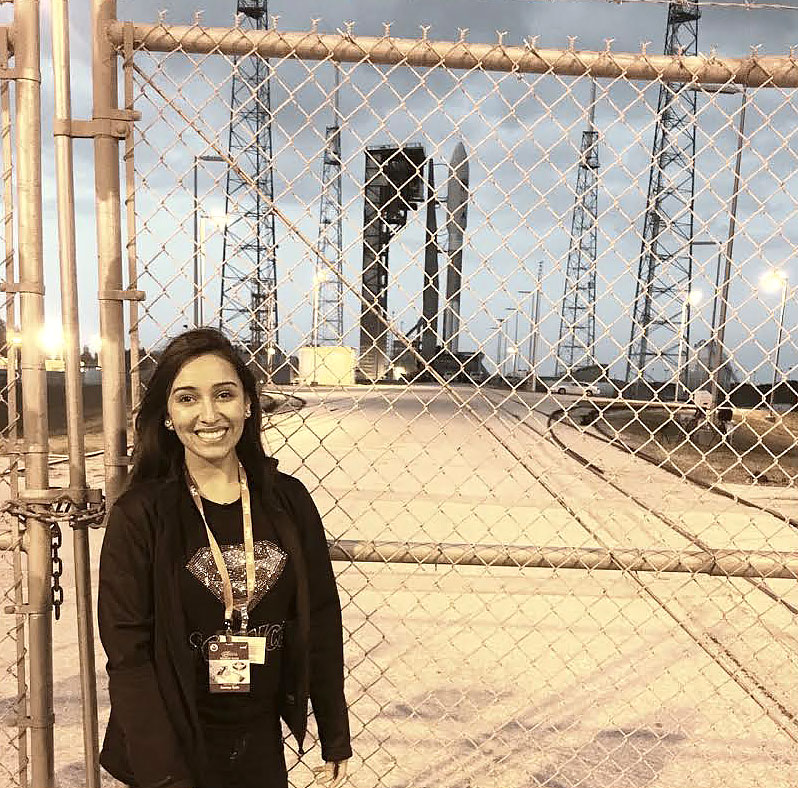
Andrea Soliz visits NASA facilities in Florida.
Space agency staff gave the AISD educators and the others an in-depth tour of the NASA facility. They met with project managers and other officials. NASA officials encouraged everyone to take pictures of what they saw. This included the Atlas V Rocket that carried GOES-R into space. They got to visit mission control and the vehicle assembly building as well as the telemetry unit. They also followed the rocket scientists at United Launch Alliance (ULA). This is where they viewed the current rocket the ULA is building.
Soliz and Quintanilla documented their entire experience through their various social media accounts. This enabled their students to follow them while at NASA.
The Stovall Middle School teacher also wanted her students to engage in this moment. Before Soliz left for the trip, she introduced the satellite to her students. Soliz surprised her students when she told them she would be leaving for Florida. Some excited students wrote questions on index cards.
Media at the launch of GOES-R.
“I took the index cards with me,” stated Soliz. “I made it my personal mission to get answers for each student’s question within the two days I was at NASA.”

Before the launch, NASA broadcasted a live Q&A session on NASA TV. Scientists and engineers that worked on the GOES-R satellite and the Atlas V Rocket took part. Soliz and Quintanilla sat in the audience on set. They and the other participants got to ask questions. They also met Dr. Thomas Zurbuchen. He is the new head of NASA’s Science Mission Directorate.
The trip culminated with the launch of the weather satellite on Nov. 19.
When most people witness a rocket launch, it is from miles away. That was not the case for Soliz and Quintanilla. They got to view the launch from much closer. She hopes the experience will inspire her students to consider STEM careers in their future. The acronym stands for science, technology, engineering and mathematics. NASA seeks to excite teachers and students and motivate them to work hard in the STEM disciplines. It seeks the next generation of explorers. NASA needs scientists and engineers to take over the torch of space exploration. The space agency is currently developing technologies to send humans to deep space destinations like Mars in the 2030s.
An image of the launch of GOES-R.
“I am extremely grateful to NASA,” said Soliz. “The opportunity gave me a chance to use real–world events in the classroom. It made the concept of space real for my students. This made science relatable and relevant.
“I got to expose a whole new world of possibilities for my students.”

About the Author: Leticia Fehling