OWL Labs at Aldine ISD Schools Help Young Learners Build Language Growth Through Storytelling
Partnership with Rice University supports emergent bilinguals, parent engagement, and teacher training.

OWL Lab teacher Maggie Abrego at Kujawa EC/PK/K Schools works with young students.
For young children just beginning their educational journey — and for many, just beginning to learn English — storytelling can be a powerful bridge to confidence and literacy. That’s the heart of the Rice Oral and Written Language (OWL) Lab, a research-based program now thriving at Vines and Kujawa EC/PreK/K schools in Aldine ISD.
Developed in 2010 by Rice University’s School of Literacy & Culture (SLC), the OWL Labs bring a sense of joy and fun to learning for young learners, especially emergent bilinguals. The labs provide bilingual books, language-rich environments, and activities that encourage language development in both English and students’ native languages.
Storytelling as a Foundation
In the OWL Labs, children spend 50 minutes in a seven-day cycle engaging in interactive read-alouds, dramatizations, story retellings, and writing activities. The environment is shaped by four guiding pillars: quality children’s literature, mature dramatic play, children’s interests, and equity and family engagement.
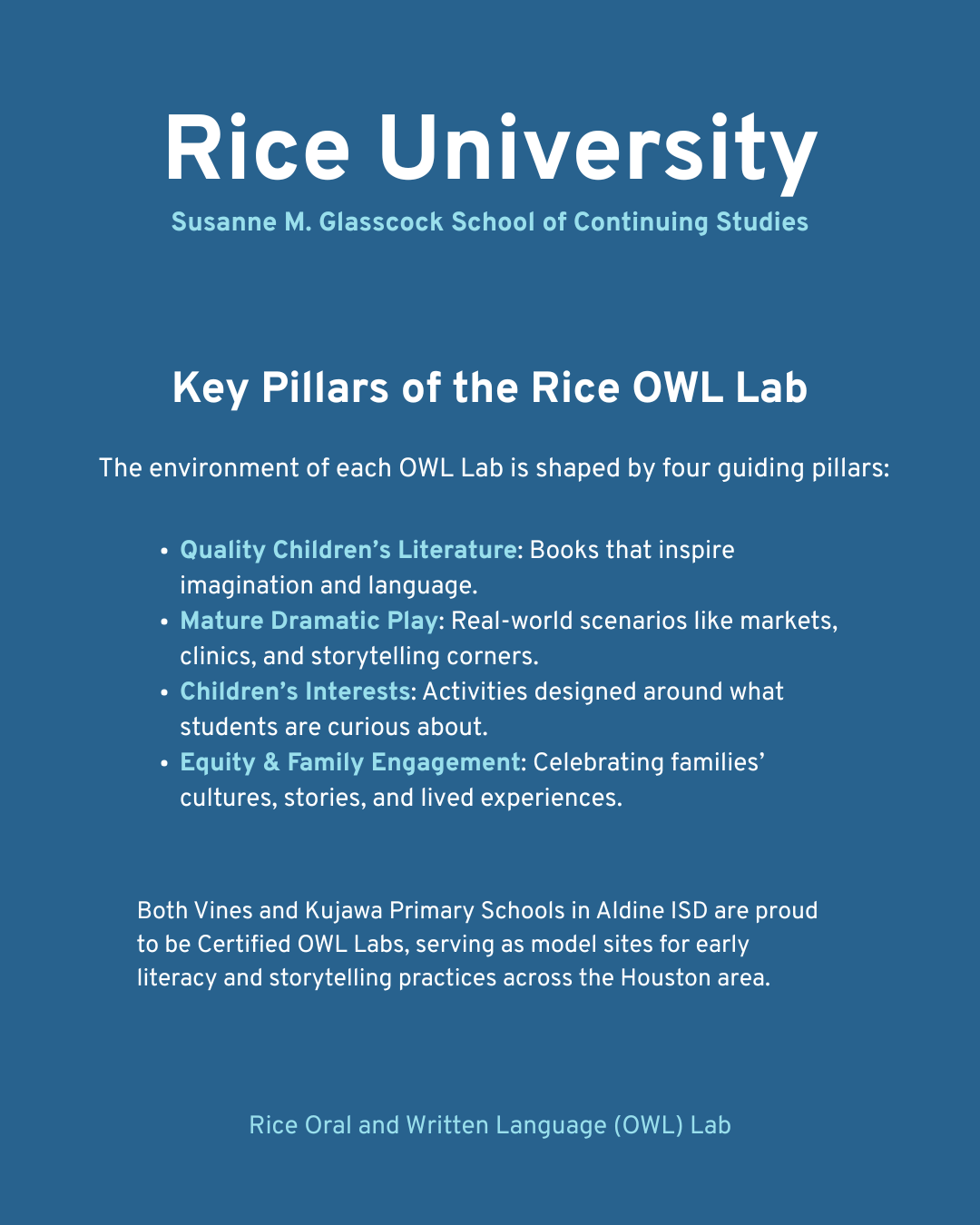 The OWL Labs are not your typical classrooms. They feature unique elements like storytelling corners with props, dramatic play areas like farmer’s markets and vet clinics, and writing stations stocked with tools for drawing, labeling, and dictating stories. These elements create an environment where children can retell favorite books, act out stories, or invent their own using costumes and real-world props. Teachers document their words, honoring home language alongside English, so even the youngest learners see themselves as storytellers and writers.
“Children are more willing to take risks and share their voices in this space,” said Laura Hinojosa, bilingual interventionist and OWL Lab teacher at Vines, where 580 students are served in the program. “Shy students and English language learners open up and use new words because it feels safe, fun, and meaningful.”
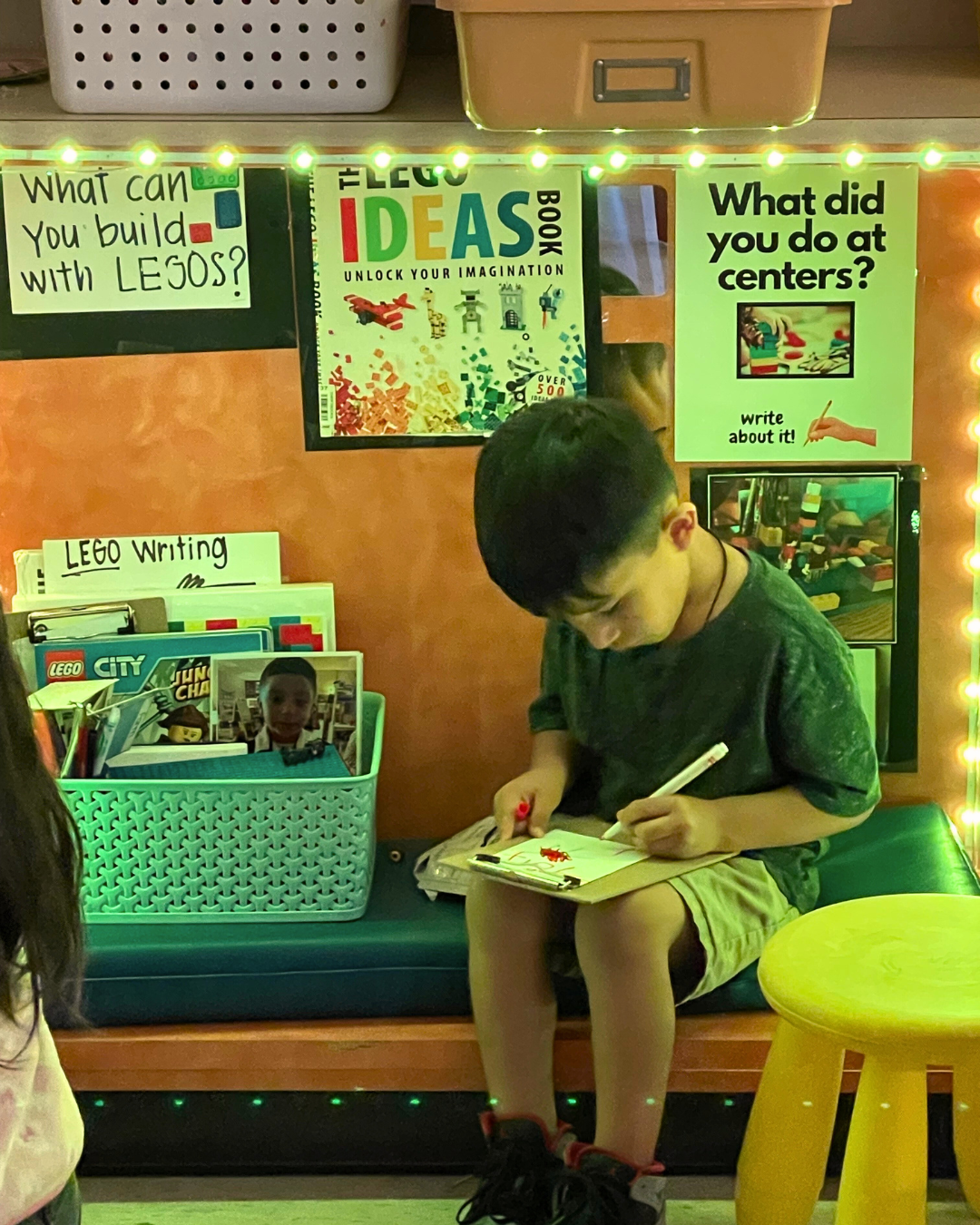 At Kujawa, where 750 students are served in the initiative, OWL Lab teacher Maggie Abrego has seen similar growth.
“In the Lab, students’ oral language flourishes as they experiment with words, retell stories, and dramatize real-life scenarios,” she said. “That confidence carries into the classroom community.”
Building Confidence for Emergent Bilinguals
Both schools report growth in confidence, vocabulary, storytelling, and self-regulation since the labs were introduced.
“In the Lab, emergent bilinguals are more willing to take language risks, participate in discussions, and sustain attention,” Hinojosa said.
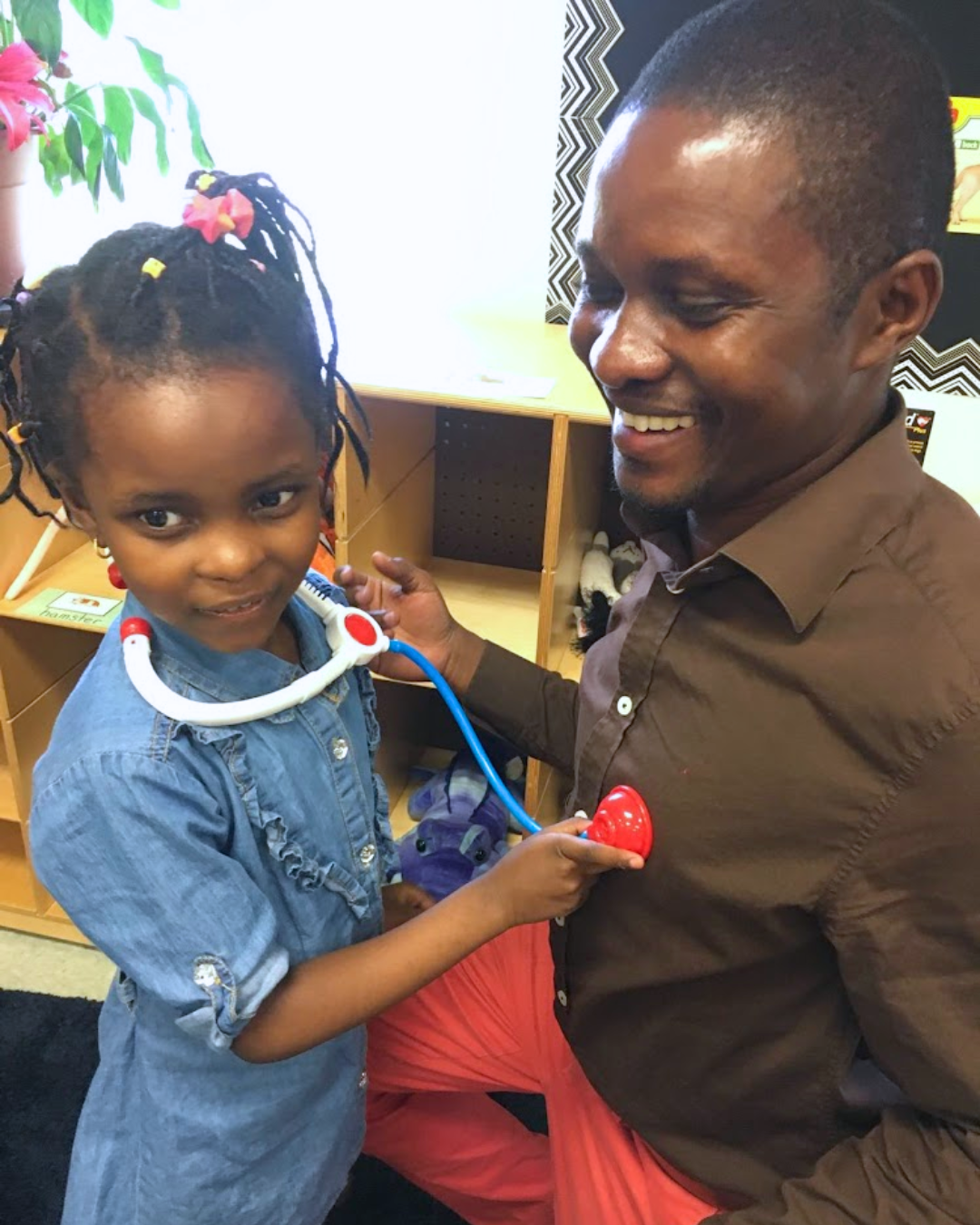 Abrego agreed: “Students are eager to share their voices and better prepared to succeed in the classroom community.”
Parent Engagement Through Storytelling
The OWL Lab model is not just about the students. It also brings families into the learning process. Parents are invited to join their children in reading, writing, and play-based centers, fostering pride and involvement in their children’s education.
During one visit to Kujawa, families dramatized a story alongside their children for the first time. At Vines, family days allow parents to collaborate on projects and strengthen connections with the school community.
“Parents have expressed pride in seeing their children take the lead,” Abrego said. “This reflects the School Literacy & Culture belief that parent involvement strengthens literacy, builds confidence, and nurtures joyful, shared learning.”
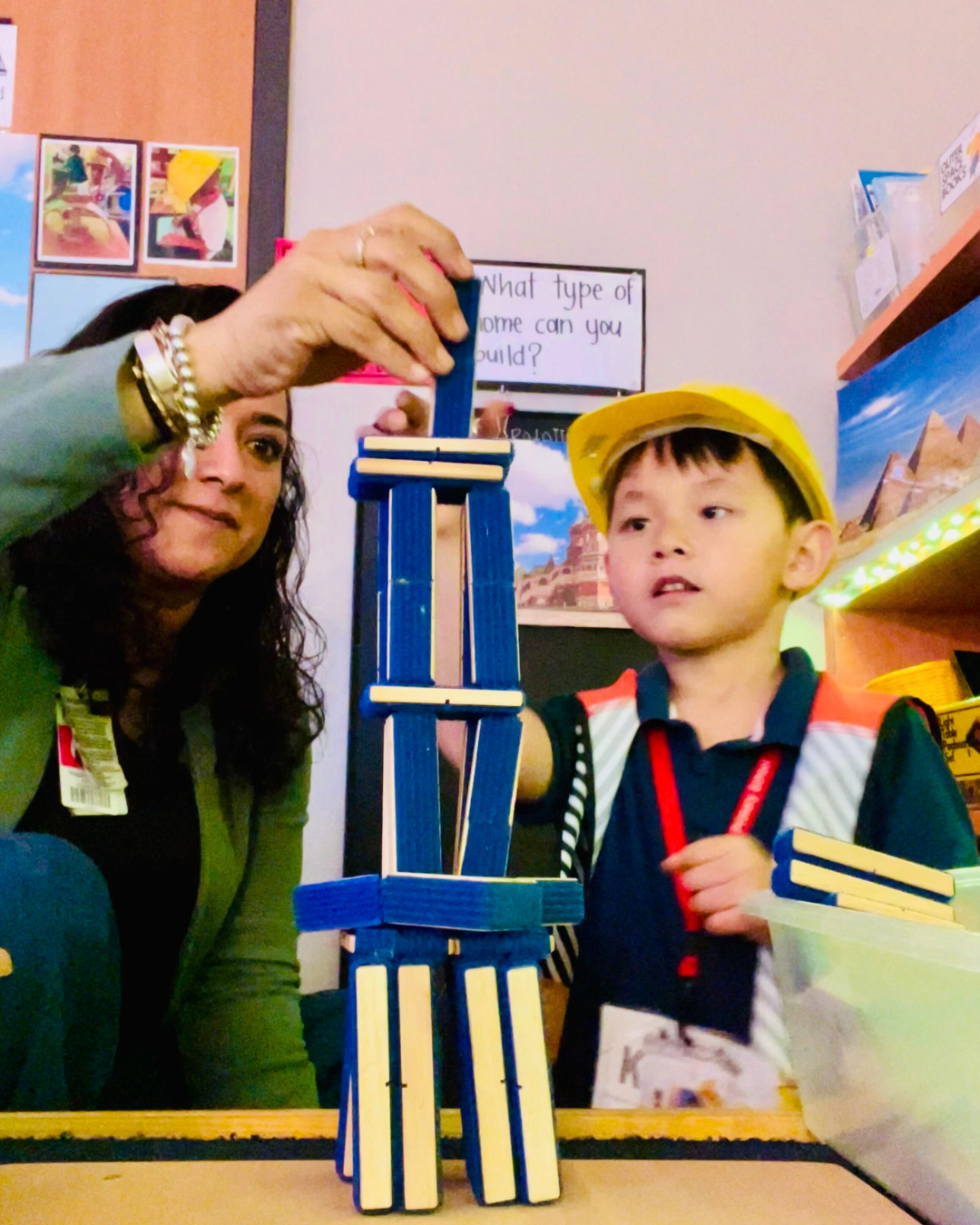 A Lab for Students, Teachers, and Families
The OWL Lab isn’t just a space for children. At both campuses, it’s a community where classroom teachers collaborate with Lab teachers through professional learning communities, professional development, and observations. The Labs also serve as demonstration sites for Rice SLC’s training programs, fostering a sense of shared learning.
“Being a Certified SLC Lab means committing to years of preparation, mentoring, and continued reflection,” said Hinojosa. “It’s about building a culture of literacy not only for students, but for teachers and families too.”
Research-Based and Rooted in Story
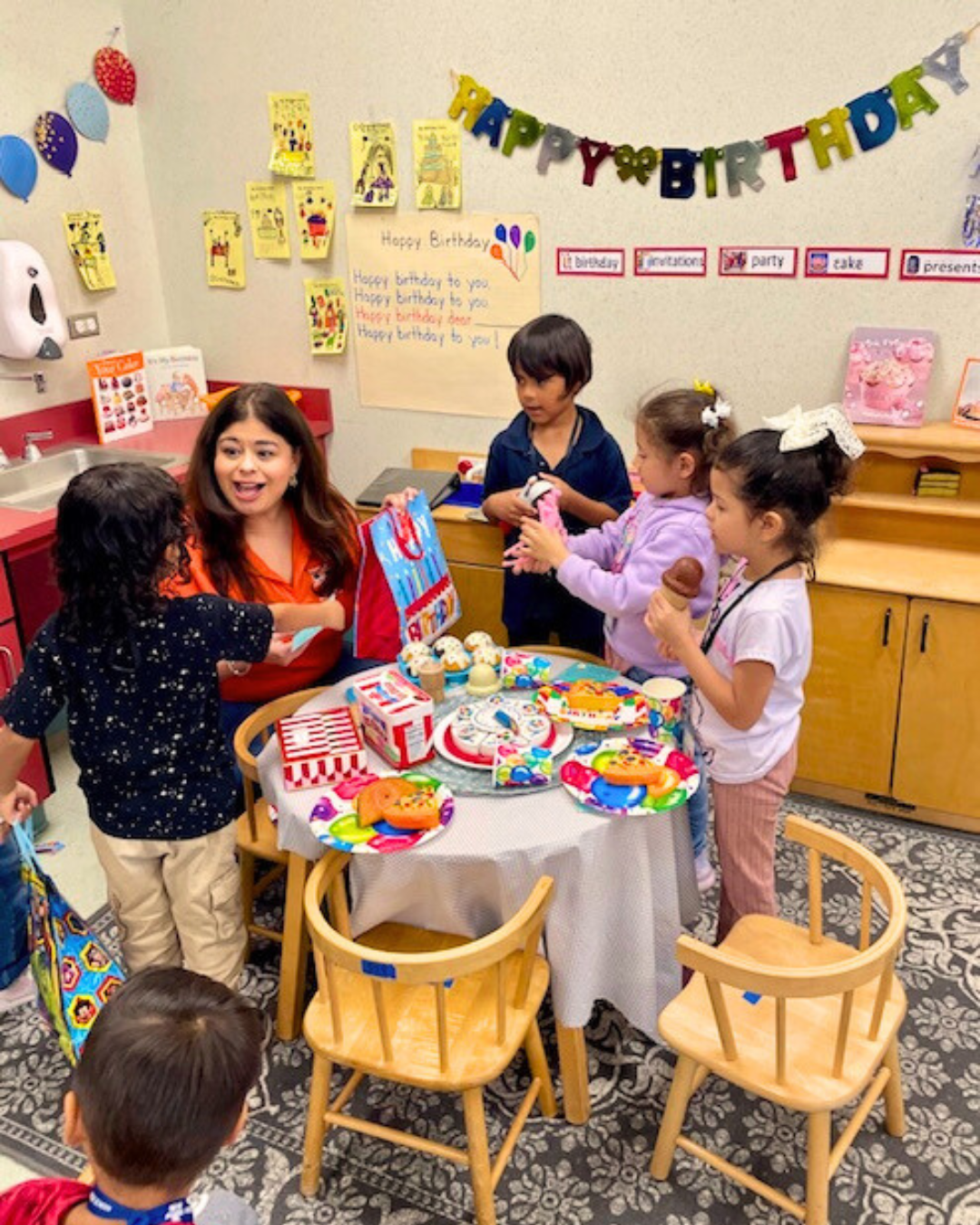
Laura Hinojosa, bilingual interventionist and OWL Lab teacher at Vines EC/PK/K School, works with students through interactive play.
Rice SLC leaders emphasize that the Lab’s strength lies in its foundation: storytelling as a catalyst for language growth.
“Based on the work of Vivian Paley, story dictation is a powerful early literacy practice,” explained Jordan Khadam-Hir, director of Rice’s School of Literacy & Culture. “When a teacher listens, writes a child’s words, and then brings them to life through dramatization, it builds narrative structure, comprehension, and identity. Children see themselves as writers long before they can write independently.”
To remain certified, Labs undergo annual reviews, and teachers receive ongoing training through summits and yearlong mentorships. This continuous support ensures that the program is always evolving and improving, giving teachers and students the confidence to succeed.
Looking Ahead
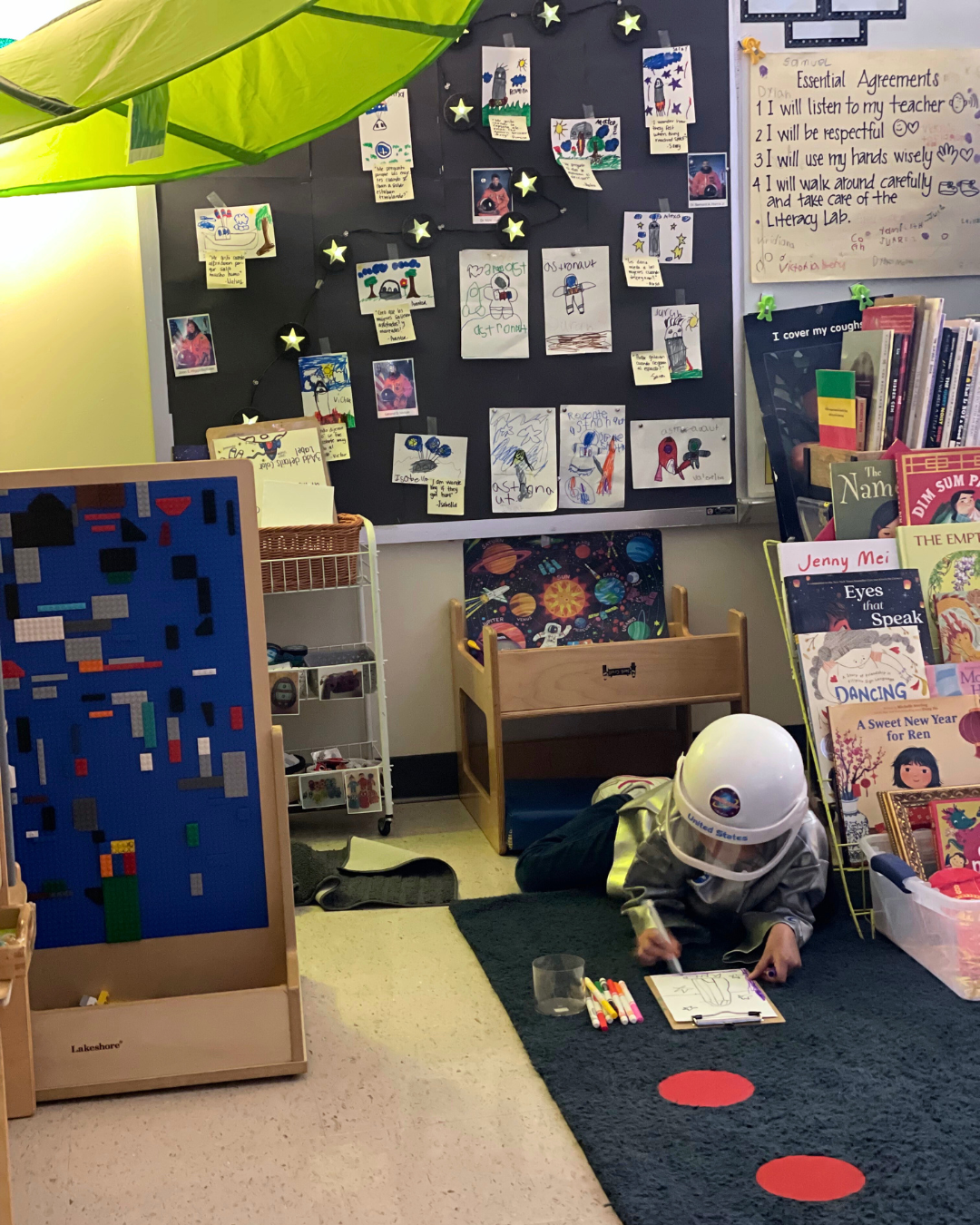 As Aldine ISD continues to expand its focus on early childhood education, programs like the OWL Lab provide students with a strong foundation for success in reading, writing, and beyond.
“We’re proud of our partnership with Aldine ISD,” said Lori Espinoza, assistant director at Rice’s School Literacy & Culture. “Our hope is that practices from the Lab become embedded in every classroom, so all children benefit from language-rich experiences that honor their voices and stories.”
At Vines and Kujawa, that vision is already taking shape — one story, one conversation, and one child at a time.
Transforming Lives
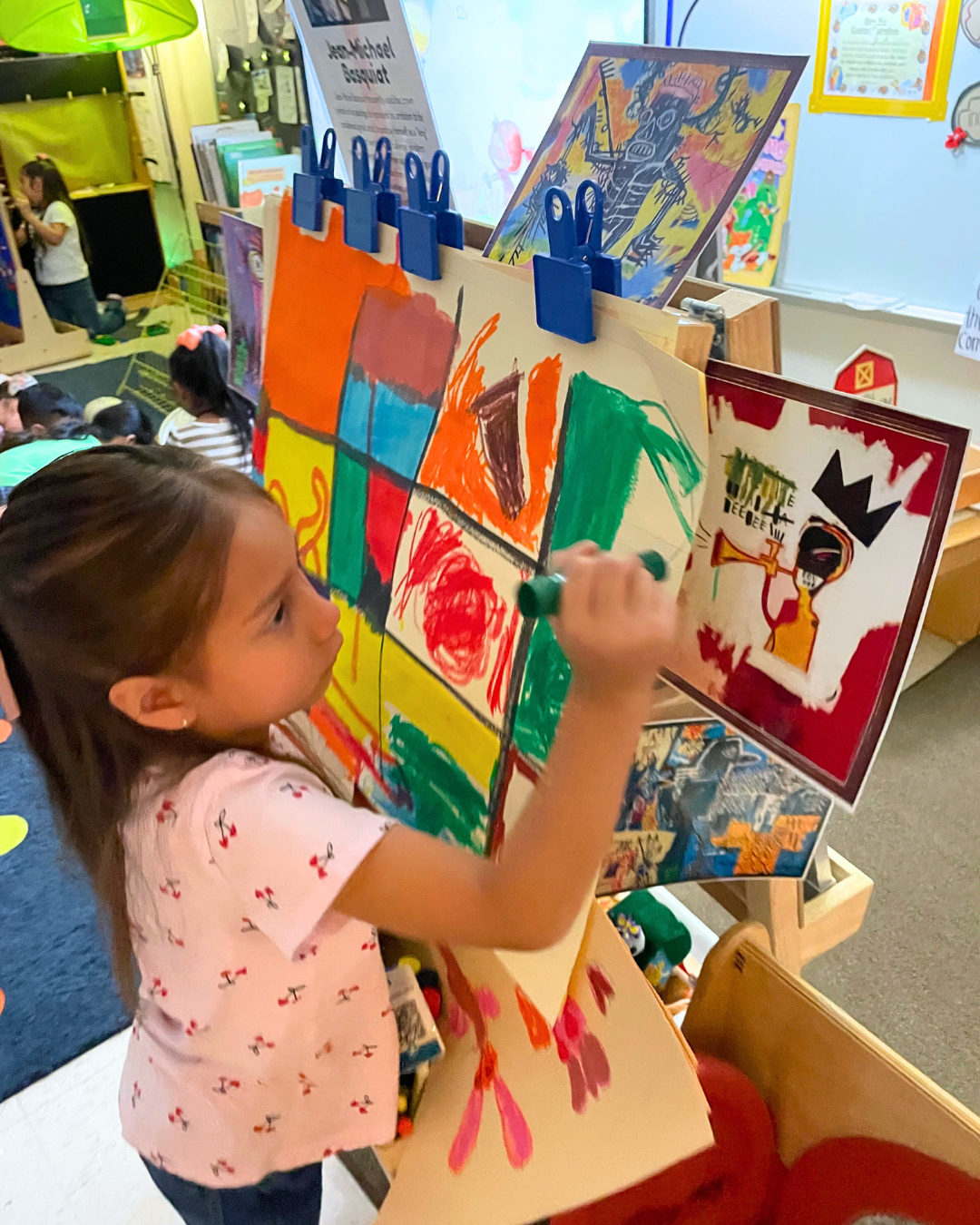 The impact is evident in individual stories.
At Kujawa, a student named Kayden once struggled to engage with others. Through dramatization activities in the Lab, he discovered a playful way to join in. “His whole world changed,” Abrego said. “Over the school year, he became a more confident child who was able to share his ideas and interact with classmates.”
At Vines, a timid prekindergarten student named Marcela, whose family has limited English, arrived after a difficult immigration journey. Initially hesitant to speak, she gradually found her voice through story baskets, visuals, and gentle modeling. By the end of the year, she eagerly participated in group discussions and loved writing her own stories.
When parents are invited to join their children in the Lab, the results become even more powerful. Families dramatize stories, try out new literacy strategies, and often leave inspired to bring those practices home. Parent days also allow teachers to celebrate families’ cultures and use these “funds of knowledge” to enrich learning for all students.
“Parents have told us they feel empowered to read, teach through play, and introduce new vocabulary at home,” said Hinojosa. “That’s when we know the Lab is creating lasting connections between school and family.”
For Aldine ISD, stories like Marcela’s and Kayden’s show why the investment matters. Through play, storytelling, and family involvement, the OWL Labs are helping students grow into confident learners ready for the future — and forming a part of the #AldineStory.
For more information about the OWL Labs, contact the Kujawa and Vines EC/PK/K schools.
About the Author: Leticia Fehling