Carver High School AP Students Visit Museum of Fine Arts Houston, Station Museum of Contemporary Arts
Research shows museum experiences enhance critical thinking, tolerance and historical empathy.

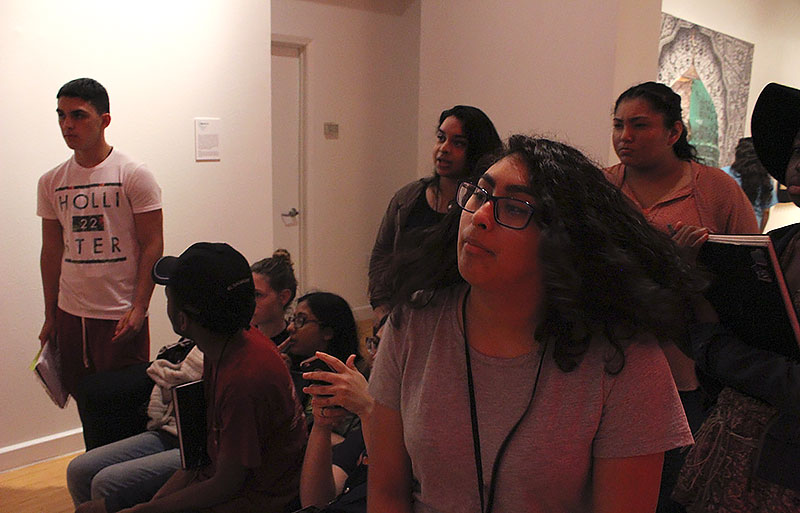
Students listen to a lecture about the exhibit at the Station Museum of Contemporary Arts.
[dropcap color=”#888″ type=”square”]W[/dropcap]hen people think of museums, they don’t usually think of them as classrooms. Museums embrace the “teaching state of mind” with tours and lectures. They are also a laboratory for creative ideas.
Carver High School advanced placement (AP®) students recently took a field trip to the [icons icon_name=”icon-external-link” icon_size=”14px”]Museum of Fine Arts Houston (MFAH) and the [icons icon_name=”icon-external-link” icon_size=”14px”]Station Museum of Contemporary Arts.
The students attended five exhibits. 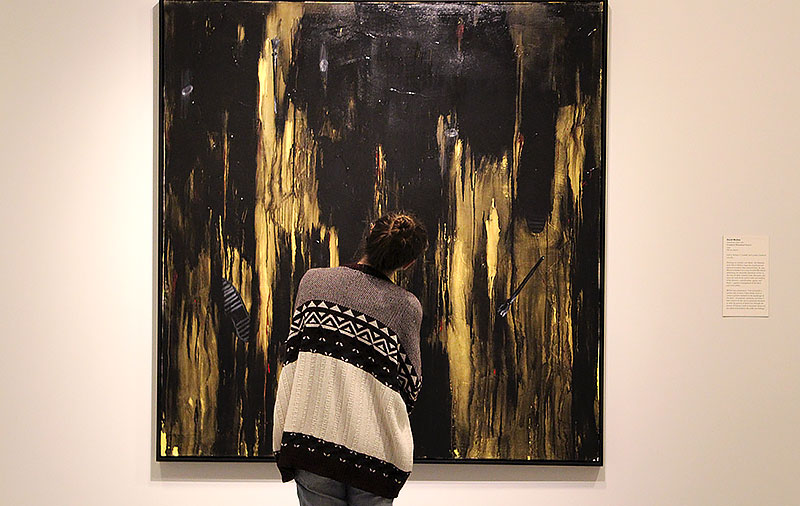 They sketched the works of art they observed. They reflected on the pieces and wrote a formal art analysis of selected works of art. They also discussed the social impact or message of the works.
The first exhibit at MFAH was the Cullen Sculpture Garden. Students viewed works by Ellsworth Kelly, Henri Matisse, Joan Miró and Pablo Picasso. Isamu Noguchi designed the site. He is the legendary sculptor known for his fusing of modernism with world culture.
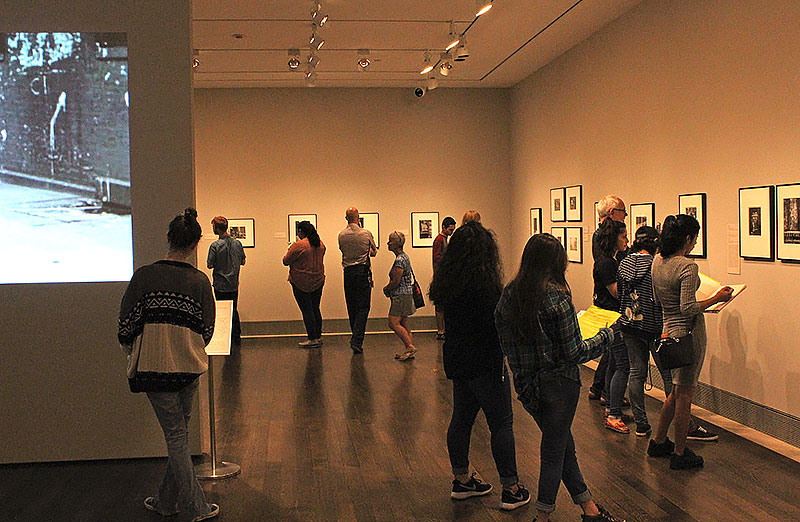 The students also viewed Statements: African American Art from the Museum’s Collection. Statements brings together more than 40 works in a wide range of media. Artists included Richmond Barthé, John Biggers and Elizabeth Catlett. The exhibit also showcased the works of Gordon Parks, Lonnie Holley and Kara Walker. Houston artists include Trenton Doyle Hancock and Tierney Malone. These forward-thinking artists broke barriers, showed America’s changing social landscape, and challenged stereotypes. They mapped the complexities of identity and politics through portraiture and narrative.
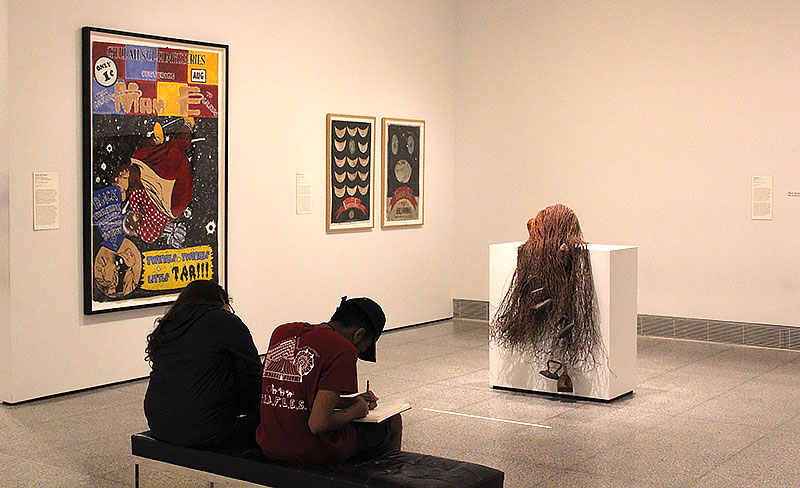 The Carver group visited the Helen Levitt: In the Street exhibit. Levitt is one of most celebrated photographers of the 20th century. She captured candid views of everyday life on the streets of New York City. Helen Levitt: In the Street spans her career from the late 1930s to the mid-1980s. Levitt was a lifelong New Yorker. She used her camera to tell the stories of the urban characters she encountered. Levitt frequented working-class neighborhoods such as the Lower East Side and Spanish Harlem. She documented the theater of life as it played out on stoops and sidewalks.
Did you know …
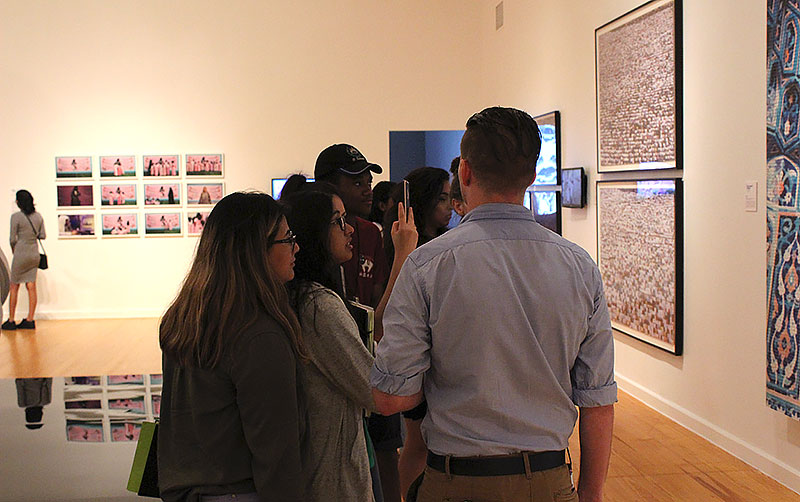 A 2013 study conducted by the University of Arkansas showed the benefits of visiting museums. Those outcomes include improvements in students’ knowledge of and ability to think critically. They have a stronger display of “historical empathy” and greater tolerance for differing views.
Here are a few key findings for students who participated in field trips:
 [ul class=”list list-search”] [li]They were able to recall details about the paintings they saw (and spent time discussing) at “very high rates.”[/li] [li]The students later displayed “demonstrably stronger ability” to think critically about art than the control group. [/li][/ul][ul class=”list list-search”] [li]They displayed stronger “historical empathy,” the ability to understand and appreciate what life was like for people who lived in a different time and place.[/li] [li]By several measures, they showed a greater interest in going again to an art museum than the students who did not visit the museum. [/li][/ul]
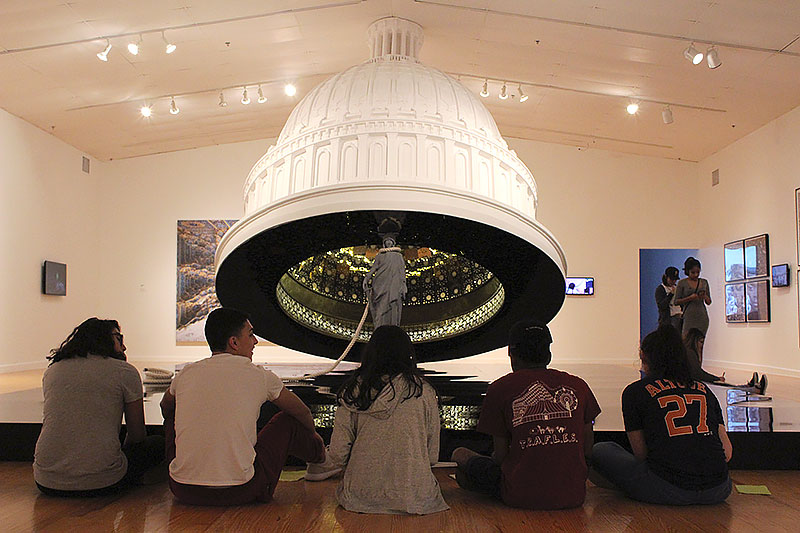 The Carver students’ last stop at the MFAH was the Islamic arts exhibit. The display has 240 objects. The exhibit illustrates the artistic production and aesthetic values in Islamic culture over the last 1,000 years. The students observed pottery, metalwork and woodwork. They also saw religious manuscripts, textiles, carpets and jewelry ranging in date from the 8th to the 18th centuries. The students learned about the art and culture of the Islamic world
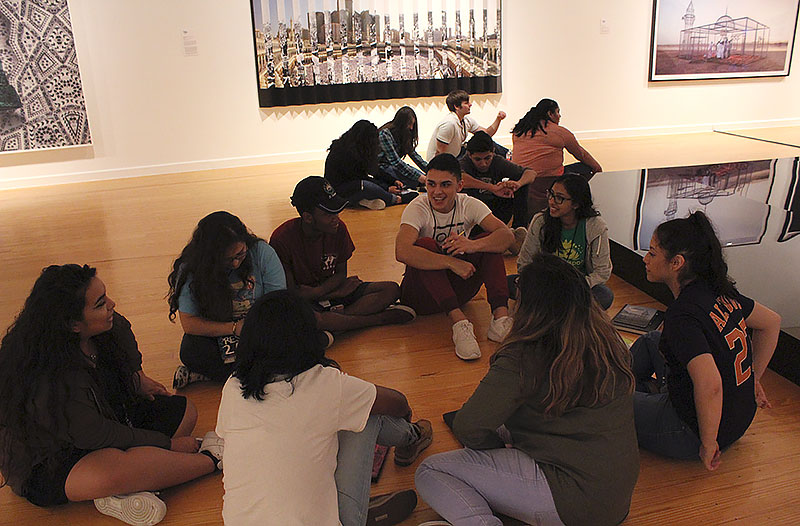 The students transitioned from ancient Islamic work to more modern artworks. They visited the Station Museum of Contemporary Arts Center. The Carver students toured the Parallel Kingdom: Contemporary Art From Saudi Arabia exhibit. The Saudi artists use a visual language. They seek to increase understanding of Saudi society and culture. Much of our collective knowledge on Saudi Arabia comes through a mediated lens of politics, conflict and religion. The boundaries of internal Saudi development have evolved. The artists hope their works reflect Arab progress socially and economically. The works also challenge Western concepts of Saudi’s cultural history.
* Carver HS senior student Herson Martínez provided the pictures.
Have you visited a museum today?
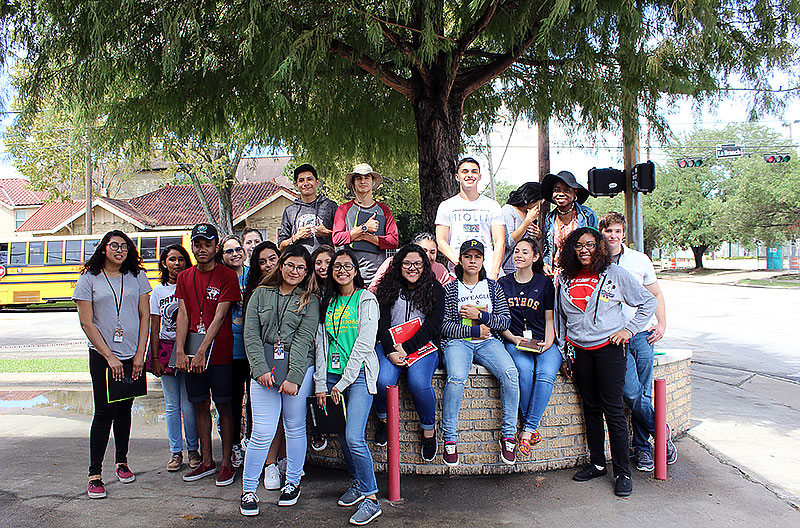
Carver High School made U.S. News & World Report‘s Best High Schools in the U.S. 2016 rankings. The magnet school focuses on engineering, applied technology and the arts.
About the Author: Leticia Fehling