Living History: Students Connect With Civil Rights Legend
Joan Trumpauer Mulholland, one of the original Freedom Riders, visited with Aldine ISD students.

Joan Trumpauer Mulholland poses with Gwendolyn Adams-Lockett (far right) and student Laila Ai-Ling Adams. Laila’s History Day project is about Mulholland’s role and impact in the Civil Rights Movement.
[dropcap color=”#888″ type=”square”]H[/dropcap]istory came to life for groups of Aldine ISD intermediate and middle school students. They recently spent a morning listening to the stories of a Civil Rights icon.
Getting an interview with the legendary Freedom Rider, finally became a reality. Laila Ai-Ling Adams, 13, recalls asking for a phone interview with Joan Trumpauer Mulholland. The seventh grader’s History Day project is about Mulholland. Laila attends Lewis Middle School.
“I wanted the interview to form part of my research,” said Laila. “I had no idea that Mrs. Mulholland would actually fly here to see me.”
Laila was not the only lucky AISD student to hear from Mulholland. According to Gwendolyn Adams-Lockett, this started as a History Day interview. Yet, it quickly evolved into an extraordinary opportunity. She helped coordinate a presentation that intermediate and middle school students could attend. [icons icon_name=”icon-external-link” icon_size=”14px”]Adams-Lockett is program director of elementary and intermediate social studies. She is also Laila’s proud mom.
“You read about people, but normally you don‘t get to meet them,” said Adams-Lockett. “You develop a human connection. It makes it real. AISD students got to have a ‘living history‘ experience. They got to meet an extraordinary woman who fought for the freedom and liberties we enjoy today.”
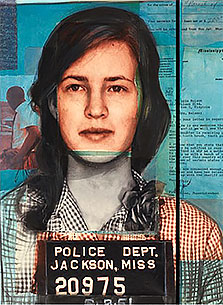
Mulholland took part in some of the most historical moments of the Civil Rights Movement. Her mug shot has been called one of the most famous in American history. She was one of the original Freedom Riders. She took part in the 1963 Woolworth’s lunch counter sit-in in Jackson, Mississippi. Mulholland helped plan and organize the March on Washington. She also joined the Selma to Montgomery march.
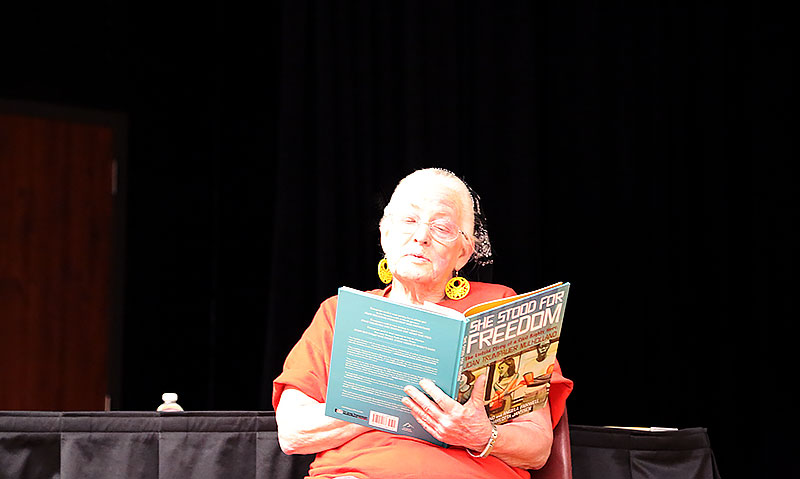 Her son Loki Mulholland accompanied the retired English teacher. Mr. Mulholland is an award-winning author and documentarian. In 2013, Mr. Mulholland produced An Ordinary Hero: The True Story of Joan Trumpauer Mulholland. The award-winning film is now a nonfiction book for children, She Stood for Freedom: The Untold Story of a Civil Rights Hero.
According to Mr. Mulholland, it took some convincing to get his mother to agree to do the documentary. He explained that she felt she did what was right and didn’t want to be in the limelight.
 To Mr. Mulholland and his three siblings, Mrs. Mulholland was “just mom.” But to many other people, she helped change the country. She was an ordinary person who did extraordinary things. The notion that everyday people can bring about positive changes is the underlying theme of his film and book.
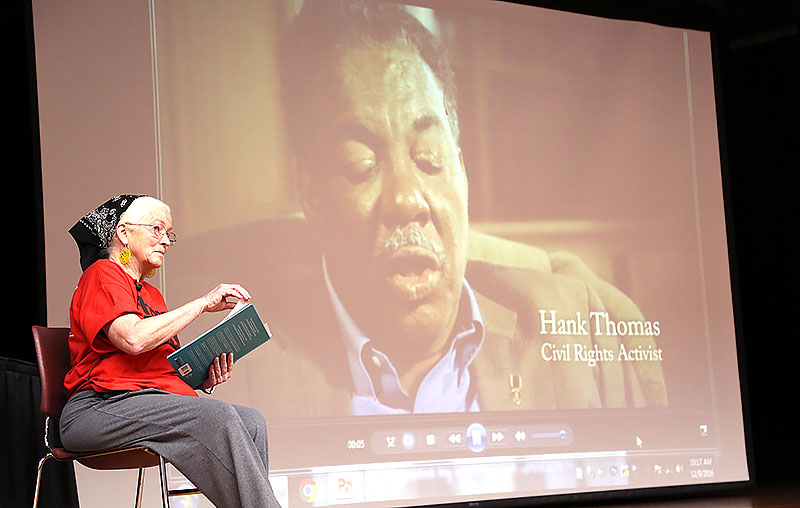
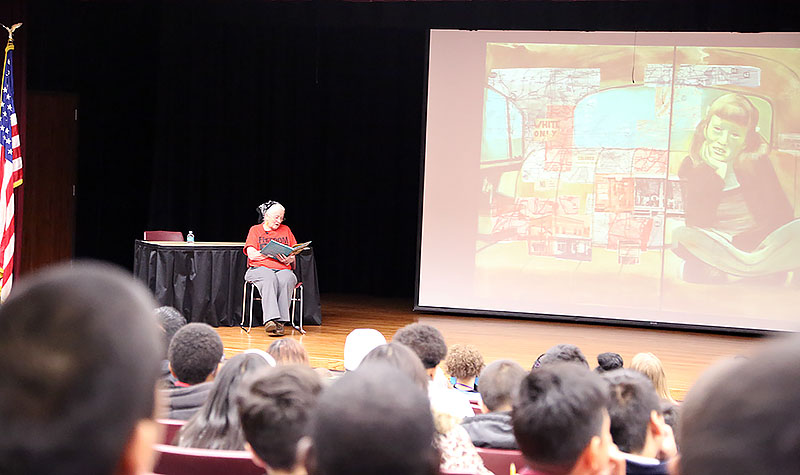
More than 300 students from 21 campuses attended. They viewed clips of the film. They also listened as Mrs. Mulholland elaborated and shared her experiences. She discussed being a civil rights activist as well as the damaging effects of racism. And the importance of working to end it.
Her journey into activism began early in her life. Mrs. Mulholland grew up in the South. Her mother was a Southerner, but her father was a Northerner. Each of her parents held different views about race and people of color. She saw the conflicting values of segregation and the moral virtues of her faith.
You can never do wrong by doing what is right. It might not always be easy, but it is always right. — Joan Trumpauer Mulholland
 At the age of 19 while attending Duke University, she joined the movement in 1960. She began taking part in demonstrations against segregation in Durham. This was against the will of her family. They feared the danger she would face. Mulholland is an example of courage and commitment. She brought awareness to the inequalities that were rampant in the Jim Crow South. She sought social justice for all people.
“Segregation was unfair,” said Mrs. Mulholland. “It was wrong morally and religiously. As a Southerner — a white Southerner — I felt that we should do what we could to make the South better and to rid ourselves of this evil.”
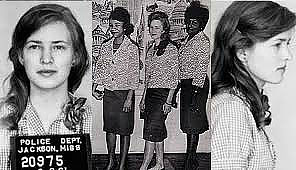
Images of Joan Trumpauer Mulholland. One is the famous image of her arrest. The center image shows her with the all-black sorority Delta Sigma Theta, which she joined in 1962.
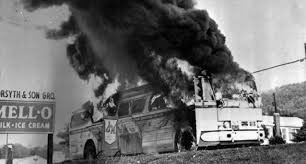
Durham became the second city in the nation to have sit-ins protesting the color barrier. When Duke University pressured Mulholland to stop her activism, she dropped out. Mulholland devoted herself to the cause. In 1961, the first Freedom Ride ended with a firebomb. This did not deter Mulholland. She joined her friends in Mississippi. There other activists poured in from around the country. Mulholland and others were arrested. She spent three months in jail in the most notorious prison in America: Parchman. Imprisoning activists was common. It was used to intimidate people involved in the movement. The prison’s superintendent sent a letter to Mulholland’s parents. The superintendent chided them for allowing their daughter to take part in “violating laws.”
After Mulholland was released, she stayed in Mississippi. She enrolled to attend Tougaloo College, a historically black school. Mulholland believed that integration was not a one-way street. She believed that whites had to make that journey too. Not everyone was happy with a white woman in a black college. She has supporters but also received hate mail. The state attempted to close the college down. But, the school’s charter predated the “Jim Crow laws.” This prevented state and local laws from being enforced.
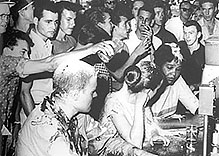
John Salter, Joan and Anne Moody (seated, l-r) at the Woolworth’s lunch counter, 1963.
On May 28, 1963, Mulholland took part in the infamous sit-in at the Woolworth in Jackson. John Salter, a professor at Tougaloo College, and Medgar Evers, the field secretary of the National Association for the Advancement of Colored People (NAACP), planned the demonstration. The peaceful event became violent as an angry crowd of white high school students formed. The mob began to hurl insults and dump sugar and mustard at Mulholland and her friends. The mob called Mulholland a “traitor” for going against her own race. The mob dragged Mulholland and her friend Anne Moody out. But they broke free and returned to the counter while others were beaten and bloodied. Police and FBI officers stood by and watched. After three hours, the police finally escorted them safely out of the store.
That summer, she began to work on another large demonstration. It became known as the March on Washington. On the morning of August 28, 1963, nearly 250,000 American listened to Martin Luther King Jr. at the Lincoln Memorial. It would become known as the “I Have a Dream” speech. Mulholland and others believed in this dream. She vowed to continue to work to achieve civil rights for everyone.

“I wasn’t really afraid,” said Mulholland. “I was beyond fear. I think I was just driven by determination to carry this through.”
Three weeks later, the Ku Klux Klan planted a bomb at the 16th Street Baptist Church. The explosion killed four little black girls. They had been preparing for a special Youth Sunday program. The church lesson that day was “The Love That Forgives.” Joan and her friends traveled to see what remained of the church and to attend the funeral. The National Guard fearing there would a violent demonstration, stood on rooftops. They pointed guns at the funeral goers. This marked one of the saddest days of the movement. All anyone in attendance was thinking of was the young lives taken in such a violent act.
 Taking part in the Civil Rights Movement was dangerous. It was dangerous for a white woman to ride in a car when the occupants were both black and white. At times, she had to ride on the floor of the car, covered by a blanket. She had brushes with death such as being chased by an angry mob of white men and shots fired into the crowd of demonstrators. Her choices landed her face-to-face with the KKK. Mulholland and several others were on the KKK’s “Most Wanted” list. The Klan believed that by killing her and other activists that it would stop the movement. That it would stop blacks from seeking the right to vote. Voting meant things would change. And they didn’t want things to change.
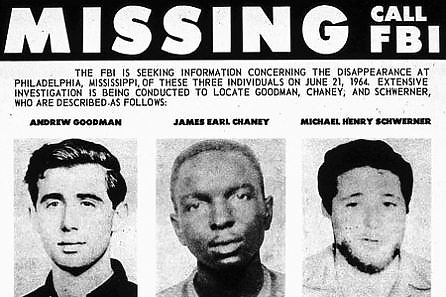 When college students from the North joined the movement in Mississippi, their first stop was usually at Tougaloo College. Mulholland was one of the people who gave the orientation. It became known as “Freedom Summer” as hundreds worked for civil rights. They all knew the risks. On June 21, 1964, three workers went missing in Mississippi. The FBI launched an investigation. The agency soon announced that Andrew Goodman, James Earl Chaney and Michael Henry Schwerner had died. Chaney was originally from Mississippi while Goodman and Schwerner were from New York. This made Mulholland and the others work harder to “promote the brotherhood of man and peace.”
“The movement became family,” stated Mulholland. “Once you stepped outside the bounds of acceptability, there was no stepping back. You could only go forward. Black kids sometimes couldn‘t go back, either, not because their parents disowned them, but because it wasn‘t safe. They were asked not to come back. They knew they or their parents could be killed, or their homes burned down. So for a lot of us, there was no turning back, and we became family.”
 The Civil Rights Act of 1964 passed the following month. But there was still work to be done. Mulholland continued to take part in events like the Selma to Montgomery March in 1965. President Lyndon B. Johnson signed the Voting Rights Act into law that same year in August. While this gave Mulholland hope, there was still work to do. James Meredith led the March Against Fear form Memphis, TN to Jackson, MS. He was shot on the second day of the march. Thousands, including Mulholland, rallied to finish the march for him.
For a time, Mulholland worked as a typist at the Smithsonian Institution. The American History Museum was just opening. It had virtually nothing on black history. The Smithsonian enlisted Mulholland to help. She used her contacts to find items that would represent African-American culture. Items collected from the Civil Rights Movement included picket signs and a burned cross. The collection also includes fragments of stained glass from the bombed 16th Street Baptist Church.
This is an ordinary person just like you, but you have to choose to stand up to bullying. She made a choice at a young age and was prepared when the time came. Being different is what makes a difference. — Loki Mulholland
The presentation had a Q&A session with mother and son both answering students’ questions. A student asked if they (activists) retaliated against the attacks. 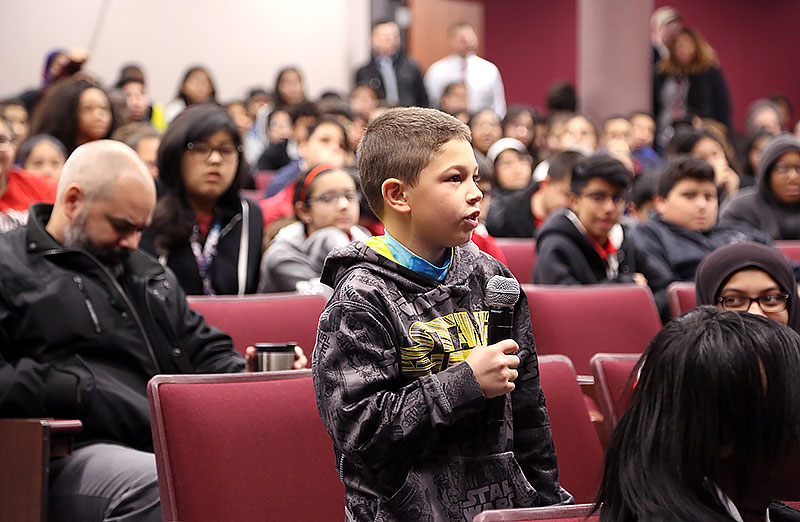 She stated many in the Civil Rights Movement followed the teachings of Mahatma Gandhi. She also followed her church teachings. This meant they wanted to bring change peacefully and not through retaliation. They believed they were doing right. They believed people would see this. In time, people did.
Another student asked her about violence in the news. Mrs. Mulholland’s response was quick. She believes we all need to get along. This should be a brotherhood of men and women.
One student asked if Mulholland had friends in the movement or that inspired her. Mulholland said she would not have gotten as far without her friend Mary. It was Mary who dared her at a young age to visit the side of town where blacks lived. This was an eye-opening experience. It cemented in her that it was not fair how people of color were treated.
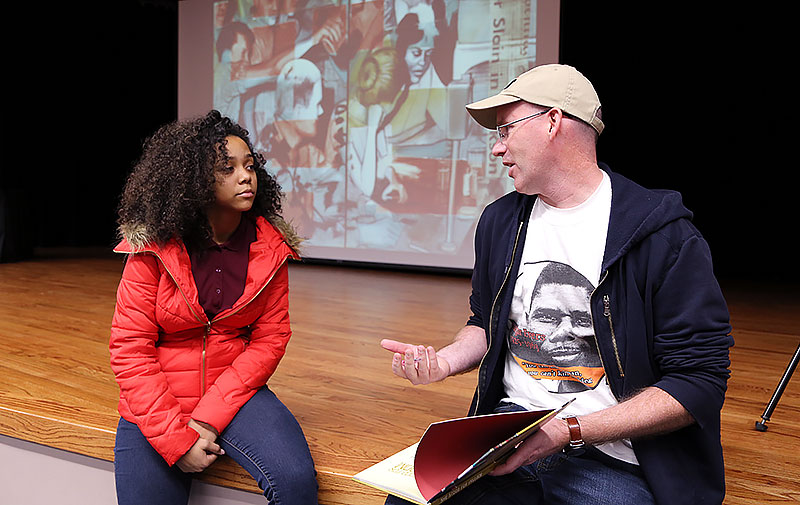
Loki Mulholland talks with an Aldine ISD student.
Students wondered if she was afraid during the Civil Rights Movement. She stated that fear was a waste of energy that “keeps you from your focus.” She added that apprehension is OK, but not fear.
One of the last questions was about segregation. A student wanted to know if she felt it had ended.
“Segregation has improved,” said Mulholland. “But it still exists. You can see it in housing and schools. I wanted my children to grow up understandings all people from different backgrounds. My children attended a multicultural school.”
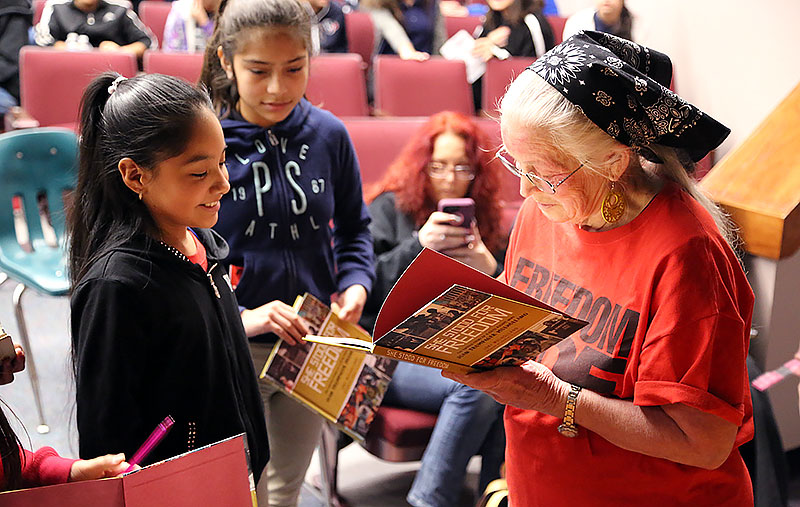
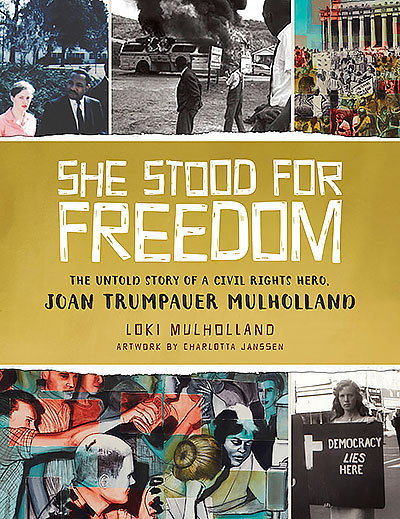 At the conclusion of the Q&A session, students in attendance received a copy of the book. Cindy Buchanan worked with Milton Van Dusen at [icons icon_name=”icon-external-link” icon_size=”14px”]Bound to Stay Bound Books and Gordon Herring from [icons icon_name=”icon-external-link” icon_size=”14px”]Follett Library Services who donated books. [icons icon_name=”icon-external-link” icon_size=”14px”]AISD Library Media Services Department also purchased copies of the book for students. Buchanan is program director of Library Media Services.
Mulholland took time to sign the students’ copies of the book.
Just as she was about to step down from the stage, student Naomy Frometa Sánchez approached her. The eighth grade student from Teague Middle School was near tears. She thanked Mulholland for what she did and for visiting with students.
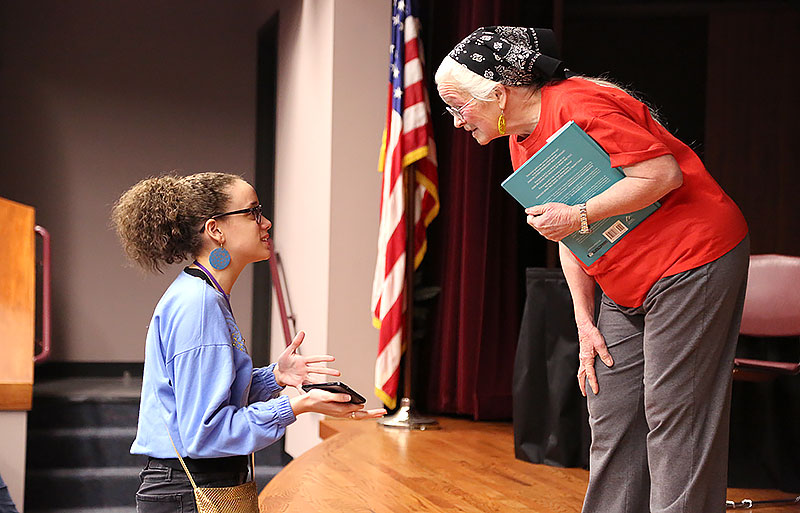
Noamy Frometa Sánchez thanks Mulholland.
When asked why she was so moved by Mulholland, Naomy stated she felt a kindred spirit. Naomy’s father fought for human rights in Cuba against the Fidel Castro government.
“I loved hearing that one person can make a difference,” said Naomy.
She was not the only one inspired by the Civil Rights icon. Laila is excited to have chosen Mulholland for her history fair project.
“Mrs. Mulholland‘s kindness and generosity showed me that I chose the right person to research for my project,” said Laila. “Even if I don‘t place at the History Day competition, I am already a winner because I got to meet someone that helped to change the world.”
Anyone can make a difference. It doesn’t matter how old or young you are. Find a problem, get some friends together and go fix it. Remember, you don’t have to change the world … just change your world. — Joan Trumpauer Mulholland
Thank you Joan Trumpauer Mulholland for Making a Difference!
About the Author: Leticia Fehling