Disponible en:
 Español
Chief of Police Paul Córdova Shares His Passion for Chess With Students
Disponible en:
Español
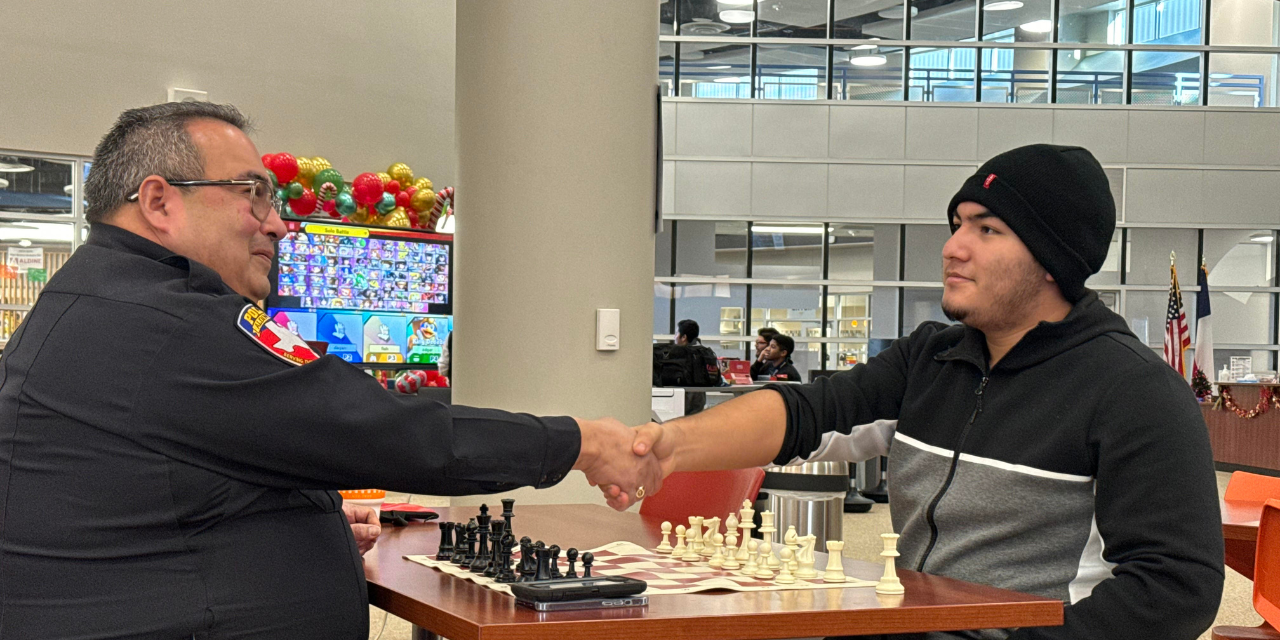
Chief Paul Córdova and Blanson CTEHS student Dagan Ponce de León begin their round of chess.
At an Instructional Leaders Team (ILT) meeting earlier this school year, everyone played the ice-breaker game “Tell Us Something We Don’t Know About You.” Here, everyone learned that the Chief of Police, Paul Córdova, played chess in school and even won a trophy for his skills. Upon hearing this, Susan Pelezo, executive director of advanced academics (Gifted and Talented Program), who oversees Aldine ISD’s chess programs in schools, invited Córdova to play with students during practice dates.
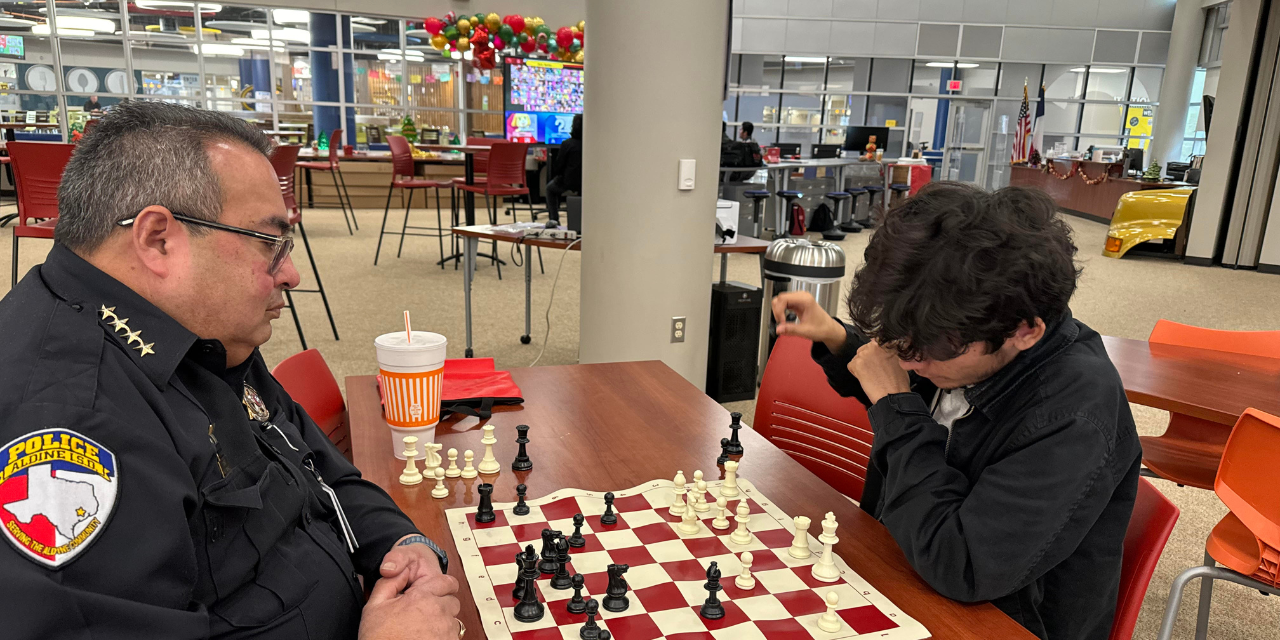
Chief Córdova plays against student Joshua Espitia.
Córdova was seen recently at the chess practice meet at Blanson Career and Technology High School on Tuesday, December 5. It was an afternoon of “rooks” and “pawns” as Córdova played with students. The Blanson CTEHS chess team, sponsored by Kevin Díaz, was practicing for their next tournament.
In addition to boosting students’ confidence, Córdova says chess meetups foster trust.
“I hope to impart some knowledge for the game I enjoy playing. But there is also another layer. Interactions like these, a chess match, will lead to positive interactions between police officers and students in our schools and neighborhoods.”
He says it’s also a way to know the people he and his officers serve while utilizing the game of chess as the vehicle for engagement. Chess empowers students through respect, responsibility, and relationship-building while teaching how to resolve conflicts cooperatively and constructively.
 Chess Clubs

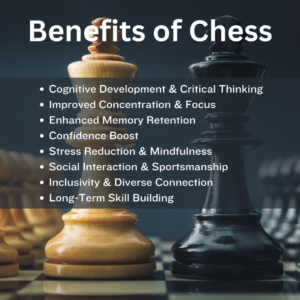
- Chess offers many academic benefits. Research and studies have shown a direct connection between playing chess and developing analytical skills. Chess helps children develop focus, concentration, and observation skills. Children learn that if they don’t watch what is happening, they won’t be able to respond to it, no matter how smart they are. Careful observation also helps children learn to strategize and plan ahead.
- Beyond academic skills, chess helps children develop social skills, learn to respect their opponents, learn how to handle defeat, and build teamwork skills as they compete together as a school team against other schools.
Córdova says the students play to win.
“I always try my best when I play chess. Sometimes I win, sometimes the students win.”
About the Author: Leticia Fehling